
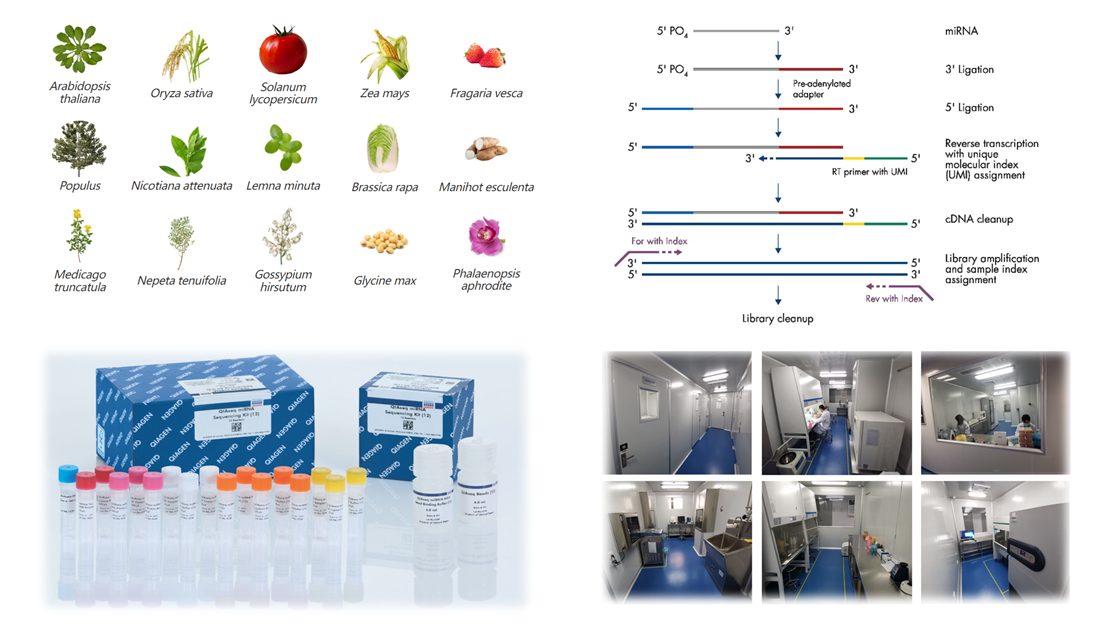
The source reports growing interest in plant EV miRNA research and states that Lifeint has processed more than 100 plant species through its plant EV miRNA sequencing service. The following summarizes experience described in the article:
1. 上清的制备方法:
Plant EVs are commonly collected from juice, culture supernatant or tissue digest. The source advises avoiding high-shear methods such as household blenders or herbal grinders because cell damage may reduce EV purity. It describes gentler approaches: a. Plants that yield juice readily: cut and gently press through gauze before EV isolation; b. Plants difficult to juice: cut into approximately 1 mm pieces, digest with plant pectinase or cellulase and remove tissue debris before isolation from supernatant; c. Tissue culture: culture tissue or cells in a suitable medium and isolate from the culture supernatant; d. Dense tissue: freeze roots or trunks in liquid nitrogen and grind. The source states that less destructive processing generally yields higher EV purity.
2. 外泌体的分离方法:
The source notes that plant materials can vary substantially with sample origin and supernatant preparation, including high polysaccharide or polyphenol content, high viscosity and fibrous residues. It recommends ultracentrifugation as a core approach with adjustments for sample properties: graded PBS dilution and repeated high-speed centrifugation, such as repeated 10,000 × g spins, for viscous samples; and prefiltration, such as dialysis membrane, or sucrose/iodixanol density gradients for pigmented or fibrous samples. Its comparison of method compatibility reflects the source’s assessment.
3. RNA提取及建库方案:
For low EV RNA input, the source describes Qiagen miRNeasy Mini Kit (catalogue 217004) with QIAzol phenol–guanidinium thiocyanate lysis and organic phase separation, followed by capillary electrophoresis to check RNA fragment distribution. It describes Qiagen QIAseq miRNA Library Kit (catalogue 331509), molecular barcodes (UMIs), and library preparation from as little as 1 ng total RNA. Statements about recovery, purity and PCR bias are those of the original article and depend on the sample and workflow.
4. 生信分析方案:
For non-model plants, the source recommends searching the Latin scientific name and genome resources such as NCBI, Phytozome and Ensembl Plants for a reference genome and annotation. Where a high-quality reference is unavailable, it describes conserved-sequence comparison against plant miRNA resources such as miRBase and PmiREN and homology-based annotation; target analysis using the species transcriptome or related genomes together with tools such as psRNATarget and TargetFinder; and de novo transcript assembly from deep mRNA sequencing followed by GO/KEGG enrichment analysis.
Service
Service no. | Service scope | Service description | Reference fee | Turnaround |
1 | Nucleic acid extraction (RNA) | Extract low-input RNA using a suitable kit and quantify it by fluorometry. | 150 CNY/sample | 2 business days |
2 | Nucleic-acid quality control (capillary electrophoresis) | Use Qsep100 capillary electrophoresis to assess EV nucleic-acid fragment distribution. | 50CNY/sample | 2 business days |
3 | miRNA sequencing | Use QIAseq for miRNA library preparation, sequencing and standard analysis on an Illumina platform; the source lists 10 million reads (3G raw data). | 1000 CNY/sample | 20 business days |
4 | lncRNA sequencing | Use Smart-seq for lncRNA library preparation and sequencing and standard lncRNA/mRNA analysis on an Illumina platform; the source lists 10G raw data. | 1000CNY/sample | 20 business days |
5 | Custom analysis (de novo) | Use de novo genome assembly for mRNA analysis in species without a reference genome, as described in the source. | 4000CNY/sample | 14business days |
| 6 | Custom analysis (target-gene function) | The source states that standard analysis includes target-gene function analysis for model organisms such as humans, rats and mice. For non-model organisms such as plants and microbes, reference genome and annotation resources for the target species must first be prepared for secondary target-gene function analysis. | 1000CNY/sample | 7 business days |
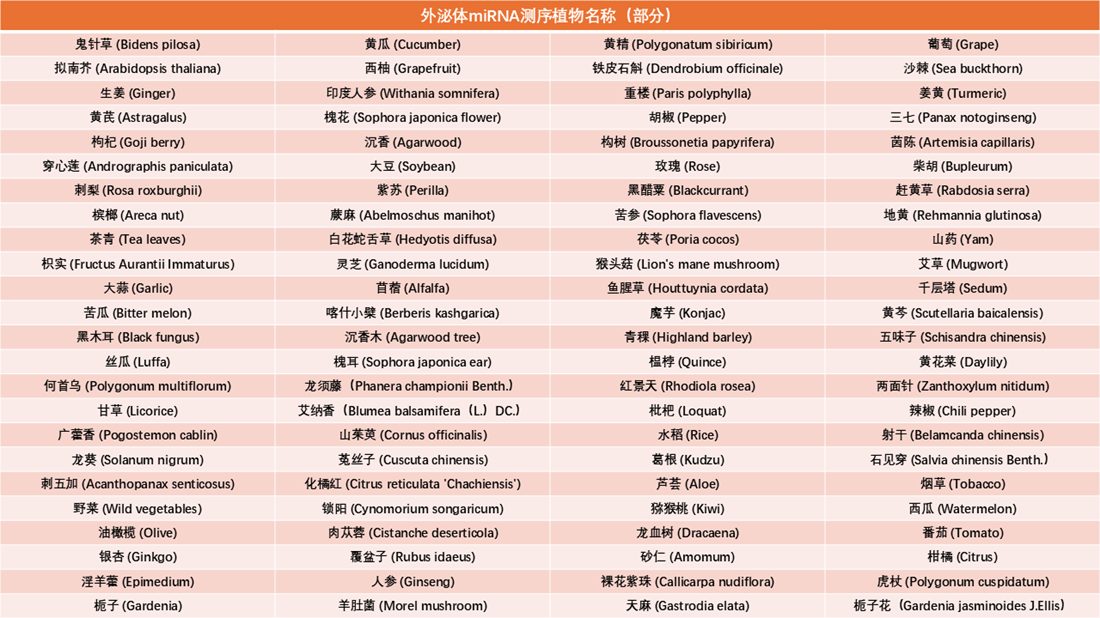
Lifeint provides EV research and application services from sample preparation, isolation and characterization to omics, functional studies, modification and scale-up. It jointly established a biomedical technology centre with Xiamen University School of Pharmaceutical Sciences, built process-development laboratories to GMP standards, and contributed to an EV expert consensus. Its service records cover more than 300 plant species.



Scan to contact us on WeCom
