EV Isolation & Characterization
separation and identification
The Lifeint team offers comprehensive EV isolation and characterization, including supernatant preparation, purification, TEM, particle sizing, protein testing and QC, with more than 20,000 EV-related projects across 300+ plant species (including over 160 medicinal species).
EV isolation methods
| Isolation method | Principle | Reference price | Turnaround | Applications |
|---|---|---|---|---|
| Ultracentrifugation (standard) | Differential ultracentrifugation | 200 CNY/50 mL | 3 business days | Standard workflow for routine samples |
| Ultracentrifugation (sucrose cushion) | Sucrose cushion to reduce protein impurities | 300 CNY/50 mL | 3 business days | Samples requiring improved purity |
| Ultracentrifugation (iodixanol gradient) | OptiPrep density-gradient centrifugation | 500 CNY/50 mL | 3 business days | High-purity applications; at least 6 samples per batch |
| Polymer precipitation (PEG) | PEG precipitation | 200 CNY/50 mL | 3 business days | Fast and low cost |
| Ultrasound nanofiltration (EXODUS) | Ultrasound nanofiltration chip | CNY 600/500 μL | 5 business days | Small, precious samples (≤1 mL) |
| Magnetic-bead capture (MSP membrane-sensing peptide) | Membrane-sensing peptide-conjugated beads | 200 CNY/sample | 3 business days | Rapid total EV enrichment (≤1.5 mL) |
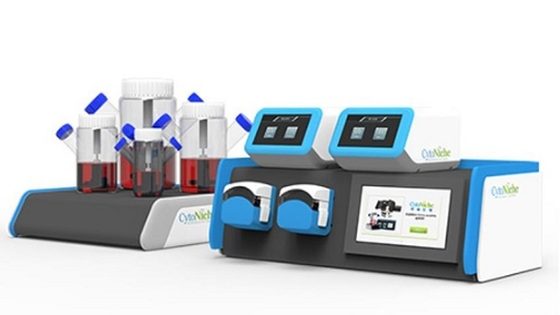
| Large-volume isolation (EXO-DM) | Tangential flow and size exclusion | CNY 1,500/L | 10 business days | Samples ≥3 L; production scale |
Q1: How do plant and animal EV isolation differ?
The main difference is sample preparation. Plant cell walls are digested with cellulase and pectinase (tissue ≤3 g, CNY 200/sample); animal samples commonly use trypsin or collagenase. Subsequent isolation and purification workflows can be shared.
Q2: What sample quantity is needed?
For pilot extraction, 3 g of material may yield tens to over a hundred micrograms; bulk extraction from 1 kg may yield several milligrams. Estimate plant input according to downstream EV requirements.
Q3: What is the turnaround time?
The standard workflow (ultracentrifugation, particle sizing and TEM) takes about 3 business days; workflows including omics take about 20 business days; large-volume isolation (EXO-DM, ≥3 L) takes about 10 business days.
Q4: Which plant species are supported?
More than 300 plant species are covered, including over 160 medicinal species such as ginseng, Astragalus, notoginseng, aloe, Centella, tea, grape and loquat. Consult the species catalogue or contact us.
Q5: Can the isolation process be customised?
Yes. The EXO-DM large-volume system supports isolation and QC adjustments for downstream requirements. Custom processes are quoted separately.
For full pricing, see Service pricing; for further omics analysis, see A guide to plant EV omics。
Updated: 2026-08-12 · Xiamen Lifeint Technology Co., Ltd.